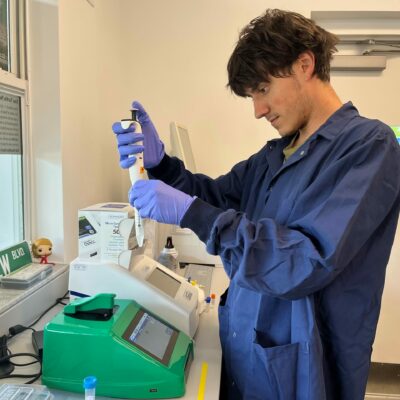
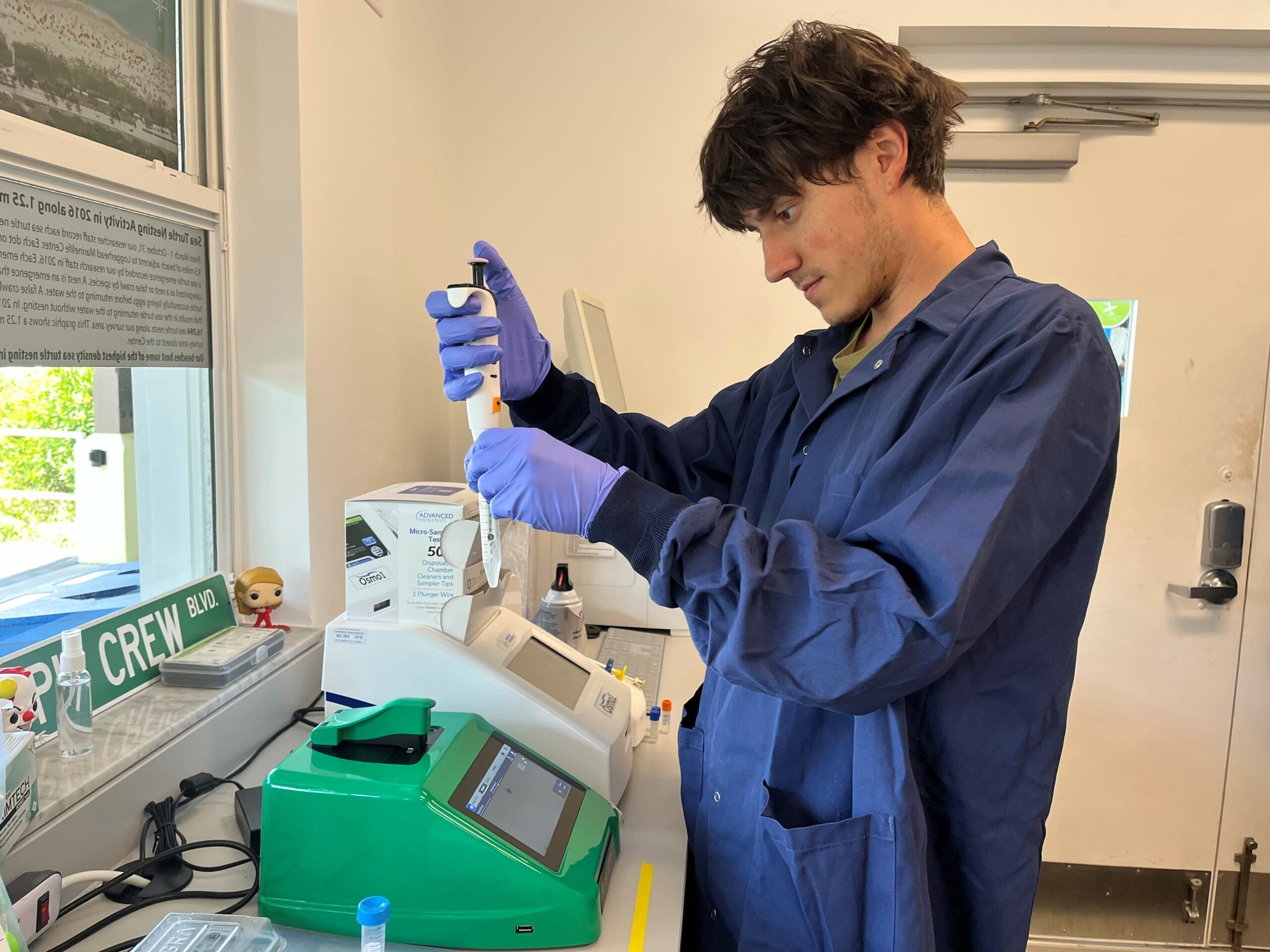
Dr. John Wise, head of the Wise Laboratory of Environmental and Genetic Toxicology, works with animals such as alligators to determine if they can serve as an indicator of how environmental contaminants can affect human health. The lab relies on a CellDrop FLi Automated Cell Counter to quantify lymphocytes just hours after sample collection, a procedure made possible by the small footprint of the instrument.
See below for a description of the Wise Laboratory’s work!
“We approach our studies with a ‘One’ environmental health philosophy. This perspective means, we consider human health, animal health, and ecosystem health to be intertwined and interdependent, such that there is only ‘one’ health. Thus, we study and compare outcomes in humans, with whales, alligators and sea turtles and ecosystem changes to better understand the impacts on health, to discover novel adaptations in animals that may improve insights into human health and to use human health data to better conserve wildlife and protect the ecosystem.
Our work includes laboratory-based mechanistic investigations using fundamental and state-of-the-art cellular and molecular toxicology tools combined with ship-and-shore-based work at field sites.
Reptiles are among the first species to be affected by changes in the environment and so serve as an important study subject to monitor the health of the environment. Alligators may experience prolonged exposures to environmental contaminants such as chromium, which is a ubiquitous global contaminant of aquatic environments primarily as a result of human activities. While chromium has been identified as a known human carcinogen, the health effects in alligators are poorly understood. Furthermore, metal levels have been previously investigated in alligators, but these studies are limited and the effects of these exposures remain to be determined. We aim to identify the risk of environmental contamination to the alligator populations and determine if alligators can serve as indicators of the threat of environmental contaminants to human health.”
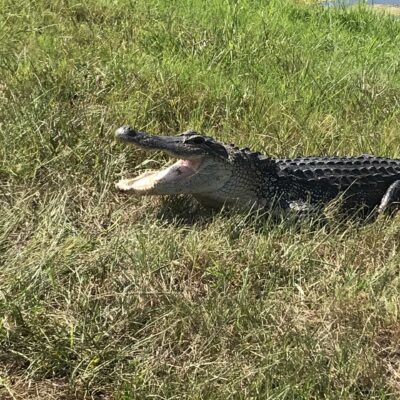
“To accomplish this, we employed several methods: 1) We collect alligator tissue samples to measure metal levels including chromium. 2) We establish primary cell lines to measure chromium induced cell death and genetic changes and compare those outcomes to the same endpoints in human and other wildlife species cell lines. 3) We measure DNA and chromosome damage in fresh alligator samples to determine if damage occurs in the individual and to monitor the population.
Our recently published study (Lu et al 2026) examined DNA damage in American alligators from three locations in Florida using the comet assay. We found alligators in Merritt Island National Wildlife Refuge had significantly higher DNA damage levels compared to those in Lake Apopka and Lake Woodruff. This trend was consistent across both sexes, with no observed sex differences. DNA damage levels were significantly higher in both adult and juvenile alligators from Merritt Island compared to the other locations.
Because of the small footprint of the DeNovix instrument, we can bring the unit to our field site laboratory and perform on site cell counts of lymphocytes to accurately perform the comet assay on the same day of sample collection within a few hours. This allows for quick processing of samples that avoids erroneous damage that may occur during the delay of shipping and handling.”